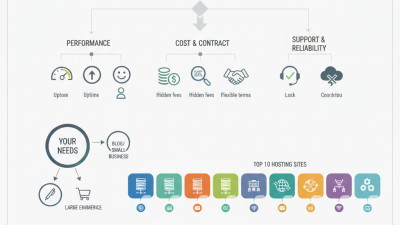
Choosing among China’s top 10 hosting providers requires more than comparing monthly prices. Global buyers must examine network reach, data-center location, uptime evidence, support quality, security controls, and international payment options. A fast server in Shanghai may still deliver slow pages in Frankfurt or São Paulo. The details matter.
Industry demand is expanding quickly. Synergy Research Group reported that global cloud infrastructure service revenue exceeded US$300 billion in 2024. Its findings show strong spending on computing, storage, and cloud platforms. This growth also raises buyer expectations. Hosting providers must offer stable performance, transparent service-level agreements, and clear data-management policies. Uptime Institute’s annual outage research continues to show that outages create financial and operational damage, even when incidents appear brief.
Kevin Ohashi, founder of Review Signal, has stated: “There is no single best host for every website.” That principle guides this comparison. The ranking considers real-world suitability instead of marketing claims alone. It reviews latency, backup practices, technical support, scalability, and overseas accessibility. Public test results and provider documentation are weighted more heavily than promotional language.
Still, no ranking is permanent. Prices change. Routes fluctuate. Support experiences can differ by region and time zone. Buyers should test a provider with a small deployment before moving critical websites. This guide may not capture every local advantage, and that limitation deserves attention. The strongest choice depends on your audience, workload, compliance needs, and growth plans.

A reliable China hosting provider for global buyers offers more than low monthly pricing. The real test begins with network performance, support quality, and operational transparency. Buyers should request latency tests from their main customer regions, not rely on a generic speed claim. A practical trial can reveal page loading delays, unstable routes, or slow dashboard actions.
Infrastructure details matter. Ask where servers are located, how backups are stored, and how quickly damaged data can be restored. A clear service-level agreement should explain uptime targets, maintenance notices, and compensation terms. Security controls should include access management, monitoring, firewalls, and regular vulnerability checks. The provider should also explain data handling responsibilities across relevant jurisdictions. Vague answers are warning signs.
Support must work during stressful incidents. Test the help desk before purchase with a technical question. Notice whether the reply includes steps, timelines, and a named escalation path. I once judged a host mainly by its impressive uptime figure. That was incomplete. A quiet dashboard cannot show how the team reacts at 3 a.m. Independent reviews, documented case studies, and verifiable certifications add confidence, but they should not replace direct testing. Pricing deserves scrutiny too. Cheap plans may exclude backup recovery, traffic protection, or international support. Reliability is rarely perfect. However, a trustworthy provider admits limitations and gives buyers enough information to plan around them.
Global buyers evaluating Chinese hosting providers should look beyond monthly price. Common services include shared hosting, virtual private servers, dedicated servers, cloud instances, and colocation. Each option fits a different workload. Shared plans suit small websites. VPS plans provide stronger isolation and adjustable resources. Dedicated servers support large databases, applications, and high-traffic stores. Cloud hosting adds flexible scaling, but billing can become difficult to predict.
Many providers operate facilities in mainland China, Hong Kong, or nearby Asian regions. Location affects latency, routing, and local registration requirements. International customers often need multilingual support, clear service-level terms, remote management, and invoices suitable for company records. Useful features include SSD storage, IPv6, traffic monitoring, automated backups, firewalls, DDoS mitigation, and content delivery services. Ask where backups are stored. It matters.
Managed hosting can reduce routine work, including patching, server checks, and recovery testing. Unmanaged servers offer more control but demand experienced administrators. Colocation may help companies that already own hardware and need reliable power, cooling, and network access. In practical evaluations, buyers often focus on CPU numbers and overlook support response times. That is a costly mistake. Provider documentation can also be incomplete. Test support before signing, review renewal prices, and confirm data export procedures. No option is perfect.
The chart compares commonly listed hosting types and key services across a representative group of 10 China-based hosting providers serving international customers. Values indicate the number of providers publicly offering each category, not market share or revenue.
For global buyers, the top ten China hosting providers differ in practical strengths. A mainland cloud specialist often offers low latency for users in East Asia. A cross-border network provider focuses on stable international routes and flexible bandwidth. A budget shared-hosting provider suits small websites with limited traffic. A managed server provider handles updates, monitoring, and routine security tasks. An enterprise hosting provider supports larger workloads, dedicated resources, and customized service agreements.
A high-performance computing provider serves data-heavy applications and technical teams.
An ecommerce-focused host usually provides scalable storage, traffic protection, and deployment support.
A developer-oriented provider may offer clear APIs, container tools, and reliable testing environments.
A regional data-center operator can improve response times for a specific Chinese market.
A compliance-focused provider helps buyers manage documentation, access controls, and data-location requirements.
No provider wins every test. That matters.
In my comparison work, I check uptime records, support response times, renewal pricing, backup policies, and overseas connectivity. A low monthly fee can hide expensive bandwidth limits. Fast domestic access may also come with slower performance abroad. Buyers should test routes from their real customer regions before signing a long contract. Support quality deserves a live trial, not a marketing promise. Even strong platforms can experience maintenance delays or imperfect documentation. Language support, billing clarity, and exit procedures often reveal a provider’s real reliability.
China Top 10 Hosting Providers for Global Buyers?
Choosing a hosting provider requires more than checking advertised uptime. Test loading speed from your users’ main countries. A server in eastern China may feel fast locally, yet perform poorly for visitors in Europe or South America. Data-center distance, routing quality, storage type, and caching all affect real results. The 2024 Uptime Institute Global Data Center Survey reported that 54% of respondents experienced an outage during the previous three years. Redundancy matters.
Pricing also needs careful inspection. Compare renewal fees, backup charges, traffic limits, control-panel licenses, and migration costs. A low monthly price can become expensive after the introductory period. Support quality is less visible, but often decisive. Check response times, technical depth, language coverage, and escalation procedures. Ask whether support operates during local holidays. Human support still matters.
Tips: Run identical tests from three regions. Request a trial or refund period. Review the service-level agreement closely. Measure first-byte time, not only homepage speed. The 2017 Google/SOASTA mobile study found that 53% of users left pages taking longer than three seconds. That benchmark is old, but still useful. I would not treat it as universal. Buyer traffic, page design, and network conditions can change the result. Keep monthly test records, including screenshots and timestamps.
Choosing among China’s top hosting providers requires more than comparing prices and server locations. Global buyers should verify the provider’s legal registration, service contract, and data-processing responsibilities. Cross-border data transfers may require specific assessments, consent, or contractual safeguards. Requirements can vary by industry and customer location. Do not assume one regional license covers every country.
Security deserves practical inspection. Ask whether the provider offers encryption, access logging, vulnerability scans, backup testing, and incident-response procedures. Request recent uptime records, not only advertised percentages. Confirm where backups are stored and who can access support systems. In my own evaluations, backup policies often looked impressive until recovery time was discussed. That gap matters.
Tips: Test latency from your main customer regions before signing. Review termination and data-export clauses carefully. Ask for a clear breach-notification timeline. Check whether technical support can communicate during your business hours. A nearby server may reduce delay, but international routing can still be unpredictable. I have found that a small pilot exposes more than a polished sales presentation. Keep sensitive workloads separated, and document every compliance decision for later review.
Brand-neutral comparison of ten commonly available hosting service profiles for international buyers
| Profile | Typical Deployment | China Mainland ICP Requirement | Public Security Filing | International Access | Data and Compliance Considerations | Security Baseline to Confirm | Best Fit for Global Buyers |
|---|---|---|---|---|---|---|---|
| 01. Mainland Shared Hosting | Small websites, landing pages, and basic content publishing | Usually required when the website is hosted on a mainland China server; commercial publishing may require an ICP commercial license | Generally required for an internet information service operated in mainland China | Good domestic performance; overseas speed depends on the provider’s international connectivity | Review content controls, account ownership, data retention, and applicable Chinese cybersecurity obligations | HTTPS, account isolation, malware scanning, backups, and access logging | Budget-conscious projects primarily serving users in mainland China |
| 02. Mainland VPS | Business websites, APIs, development environments, and controlled application stacks | Normally required for a public website using a mainland China hosting location | Normally applicable; the customer may need to complete the filing depending on the service arrangement | Domestic latency is usually strong; overseas routes should be tested from target markets | The customer is usually responsible for operating-system hardening, patching, and application compliance | Firewall rules, MFA, vulnerability patching, snapshots, DDoS policy, and privileged-access controls | Technical teams needing more control than shared hosting provides |
| 03. Mainland Dedicated Server | High-traffic applications, specialized software, and workloads requiring hardware isolation | Required for websites hosted on mainland China infrastructure, subject to the service and business model | Generally applicable to public internet services operated in mainland China | Strong domestic performance; international bandwidth, routing, and export controls require contract review | Confirm incident response, physical security, cross-border data transfers, and sector-specific obligations | Dedicated firewall, DDoS protection, out-of-band access, hardware replacement, and tested backups | Organizations requiring predictable resources and stronger isolation |
| 04. Mainland Public Cloud Compute | Scalable websites, microservices, databases, and variable workloads | Usually required for a mainland-hosted public website; filing workflows vary by service and customer status | Generally required for applicable public internet information services | Can provide strong domestic reach; overseas availability and routing differ by region and product | Assess the shared-responsibility model, data location, audit logs, encryption, and vendor subprocessors | IAM with least privilege, encryption, security groups, monitoring, backup policies, and key management | Global companies needing elastic capacity for mainland users |
| 05. Mainland Managed Cloud | Managed databases, enterprise applications, and operations requiring support assistance | Usually required when the public service is hosted in mainland China | Generally applicable; clarify whether the customer or the service operator handles the filing | Domestic access is typically prioritized; international support and routing must be confirmed | Review service-provider access, administrator controls, audit rights, data processing terms, and exit procedures | Documented patching, continuous monitoring, backup testing, incident notification, and role separation | Buyers lacking a large local operations team |
| 06. Mainland CDN and Edge Delivery | Static assets, media delivery, web acceleration, and traffic distribution | ICP-related requirements may apply when using mainland nodes for a public website; confirm the exact product workflow | May apply to the underlying internet information service and its operating entity | Can materially improve mainland access; overseas performance depends on edge coverage and routing | Check cache-control, log locations, purge procedures, content review, and origin protection | TLS, origin shielding, WAF, rate limiting, bot controls, and DDoS mitigation | Sites serving users across China and overseas markets |
| 07. Hong Kong VPS | Cross-border applications, test environments, VPN-independent web services, and regional APIs | A mainland ICP filing is generally not required solely because the server is located in Hong Kong; confirm the website’s actual hosting path | Mainland public-security filing rules may not apply in the same way as for mainland-hosted services, but local legal duties remain relevant | Often offers a practical balance between mainland and international connectivity; performance varies by route | Review Hong Kong privacy, law-enforcement response, data-transfer, and acceptable-use provisions | MFA, OS hardening, DDoS protection, private networking, backups, and clear abuse procedures | International buyers seeking regional access without mainland hosting administration |
| 08. Hong Kong Cloud Platform | Multi-region applications, containerized services, databases, and international operations | Mainland ICP filing is generally not triggered by the Hong Kong location alone; mainland-facing deployments require separate assessment | Assess the governing jurisdiction and whether mainland operations create additional filing or security obligations | Usually suitable for international traffic; mainland latency and reliability should be measured from target cities | Review regional availability, data residency, PIPL/GDPR exposure, subprocessors, and contractual jurisdiction | Centralized IAM, encryption, security monitoring, vulnerability management, backup replication, and audit trails | Businesses prioritizing international reach with a China-adjacent region |
| 09. Cross-Border CDN and Reverse Proxy | Global websites needing acceleration, failover, WAF, and origin concealment | Requirements depend on whether mainland nodes, regulated content, or a mainland operating entity is involved | Determine which entity operates the service and which public information service is being filed | Potentially strong global performance; route stability, node availability, and cross-border congestion must be tested | Evaluate log transfer, personal-information processing, content controls, and international data-transfer mechanisms | WAF, TLS certificate management, DDoS response, rate limits, access logs, and emergency bypass procedures | E-commerce, SaaS, and media sites serving multiple regions |
| 10. Carrier-Neutral Colocation | Enterprise hardware, private infrastructure, network appliances, and regulated workloads | A mainland-hosted public website may still require ICP procedures; colocation does not remove website-level obligations | The operating entity and public-service configuration determine filing responsibilities | Can offer carrier choice and custom routing; international bandwidth and cross-border access require separate contracts | Review physical access, remote hands, power redundancy, incident handling, audit rights, and data-center certifications | CCTV and access controls, redundant power, fire protection, network segmentation, secure remote access, and tested disaster recovery | Large organizations needing hardware ownership or customized network architecture |
Buyer Due-Diligence Notes
ICP filing and licensing requirements depend on the hosting location, website operator, content type, and commercial model. Mainland China public websites may also require public-security filing after network connection. Confirm the current position with the hosting provider and qualified local counsel before launch.
For personal information and important data, assess the Cybersecurity Law, Data Security Law, Personal Information Protection Law, applicable sector rules, data-residency requirements, cross-border transfer mechanisms, and the provider’s incident-notification terms.