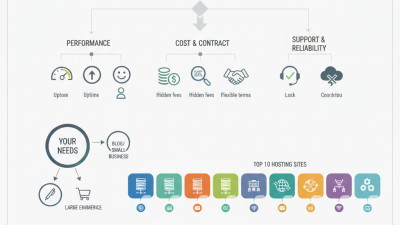
Choosing a domain hosting provider is more than comparing monthly prices. Global buyers need reliable DNS, stable uptime, clear renewal policies, and responsive technical support. A beautiful website can still fail when visitors face slow loading, expired certificates, or confusing account controls. This guide examines ten leading providers through a practical international lens.
Paul Mockapetris, the inventor of the Domain Name System, described DNS as “a distributed database.” That short explanation matters. Your domain connects customers to your website, email, payment pages, and brand identity. Good domain hosting keeps these connections dependable across regions. It should also provide transparent pricing, privacy options, backup tools, and simple migration procedures. Small details matter. A delayed support reply can cost a sales opportunity.
The providers selected here serve different needs. Some offer strong global infrastructure. Others focus on affordable registration, managed WordPress services, business email, or developer controls. We compare their performance, security features, renewal costs, interface quality, and support experience. These evaluations reflect public documentation, industry practices, and real-world buying considerations. Still, no provider is perfect. Promotional prices may hide higher renewal fees. “Unlimited” resources may include fair-use limits. Regional performance can also vary by customer location.
Use this list as a decision-making guide, not an absolute ranking. Check current terms before purchasing. Test support before a problem appears. A careful choice today can prevent a painful migration tomorrow.

Choosing a domain hosting provider in China requires more than comparing monthly prices. I examine registration rules, renewal terms, DNS controls, and support response times. A polished dashboard proves little. Ask where authoritative DNS servers operate and how quickly records update across regions. Test the provider with a small, non-critical domain before moving a business website. Check uptime records, backup procedures, account recovery, and protection against unauthorized transfers. Providers should explain identity verification and applicable registration requirements in clear language. Vague answers deserve caution.
Global buyers should also inspect network performance from several locations, including mainland China, Europe, and North America. A fast local connection may still produce slow overseas access. Request recent monitoring data, not only a marketing guarantee. Review service agreements for data handling, dispute procedures, cancellation, and refund conditions. Confirm whether technical support works during Chinese public holidays and whether English replies are genuinely useful. I have found that polite support can still lack practical expertise. That weakness matters during a DNS failure.
Reliable evaluation includes checking staff qualifications, company registration details, independent customer feedback, and escalation channels. Ask who controls the domain account if a reseller relationship ends. Confirm that you can export records and change name servers without unnecessary barriers. Current Chinese and international requirements may differ, so legal or compliance advice is sensible for regulated projects. Cheap hosting can become expensive when recovery is unclear. Document every answer before signing.
For global buyers, China’s top ten domain hosting providers should be judged by evidence, not polished sales pages. The Q4 2024 Domain Name Industry Brief recorded 364.3 million domain registrations worldwide. This scale makes renewal controls, DNS performance, and abuse response practical concerns. A credible provider should explain accreditation, transfer procedures, multilingual support, and cross-border invoicing. Ask where support operates. Ask how quickly tickets are answered. Small details matter.
Independent testing should cover uptime, route latency, TLS configuration, IPv6 access, backups, and recovery. A buyer in Frankfurt may receive different results from one in Singapore. Use monitoring probes in both locations for at least 30 days, not one afternoon.
The ICANN Domain Name Industry Indicators stress registration integrity and accurate contact data. Hosting selection should follow the same discipline. Score each provider on incident communication, data-center choices, migration assistance, and renewal pricing.
This method remains imperfect. Public uptime figures can hide packet loss, while low first-year pricing may rise sharply later. Read the renewal clause. Test restoration. Keep an independent backup. A strong shortlist needs evidence, but evidence can age quickly as routes, policies, and infrastructure change.
China’s top ten domain hosting providers serve global buyers with different strengths. One focuses on low-cost domain registration, bulk search, and automated renewal alerts. Another provides multilingual dashboards, local payment options, and responsive account support. A third combines domain management with shared hosting, SSL certificates, and daily backups. A fourth offers virtual servers, root access, and flexible resource scaling for growing websites. Speed matters.
A fifth provider emphasizes global DNS routing, CDN integration, and protection against common traffic attacks. A sixth supports domain transfers, privacy controls, and detailed DNS record editing. A seventh includes managed WordPress hosting, staging areas, and one-click restoration tools. An eighth targets agencies with reseller accounts, white-label billing, and client permission settings. A ninth offers business email, collaboration storage, and uptime monitoring. The tenth concentrates on enterprise hosting, dedicated servers, migration assistance, and service-level agreements.
Practical testing should examine loading speed from several regions, not only domestic results. Support quality also varies; fast replies may still lack technical depth. Published uptime figures require careful verification through independent monitoring. Renewal pricing deserves attention, because introductory discounts can hide later costs. Some dashboards feel crowded, and automated tools occasionally need manual correction. Buyers should compare backup retention, cancellation terms, data-center locations, IPv6 support, and security response procedures before transferring valuable domains.
For global buyers, price is only the opening question. A basic shared hosting plan commonly costs about US$3–12 monthly, while domain registration may range from US$8–20 yearly. Renewal prices can be higher. Check both figures before paying. Verisign’s Q4 2024 Domain Name Industry Brief recorded 364.3 million domain registrations worldwide. That scale makes renewal transparency increasingly important. Some providers show attractive first-year discounts, but hide transfer fees or backup charges in separate pages.
Payment flexibility also affects international usability. Look for major cards, international bank transfers, and regulated digital wallets. A clear invoice should show currency, taxes, and refund terms. Support quality matters more than promotional banners. Providers serving overseas customers should offer English tickets, live chat, documented response times, and 24-hour monitoring. The International Telecommunication Union reported 5.5 billion people online in 2024. Your website must remain reachable beyond one domestic network.
Tips: Test support before purchase. Ask one technical question and measure the response. Confirm overseas latency from three regions, not one city. Check IPv6 support, DNS management, backup frequency, and data-center locations. Independent uptime reports are useful, but they do not predict every incident. My own comparison would also review cancellation steps, because an easy signup can hide a difficult exit. That detail is often overlooked.
Choosing a China-based hosting provider requires more than comparing monthly prices. Check where your users live and test latency from their main markets. A server in eastern China may serve Asian visitors quickly, but European users could experience slower page loads. Request a short trial when possible. Measure response times during business hours and peak traffic.
Review the provider’s legal and operational documentation carefully. Ask whether your website needs local registration, and confirm that the company supports your industry and target countries. Reliable providers explain data storage locations, security controls, backup schedules, and incident response procedures. Look for clear uptime commitments, repair timelines, and refund conditions. Vague promises are warning signs.
Support quality matters just as much as hardware. Test the help desk with a technical question before signing a long contract. Can agents communicate clearly in your preferred language? Are they available during your critical operating hours? Confirm billing methods, migration assistance, firewall options, and recovery testing. Cheap plans can hide limits on bandwidth or outbound traffic. That matters.
A practical mistake is trusting a polished sales page too quickly. Real performance may differ after several months. Request customer references, inspect independent reviews, and begin with a small workload. No provider is perfect. A dependable choice is the one that explains its weaknesses, documents its responsibilities, and gives you a realistic path to change providers if business needs shift.
Anonymized comparison of common China-based hosting provider profiles for international buyers
| Rank | Anonymous Provider Profile | Primary Hosting Model | Typical Mainland Coverage | International Connectivity | ICP Filing Support | IPv6 Availability | SLA Expectation | Best Fit for Global Buyers |
|---|---|---|---|---|---|---|---|---|
| 1 | Profile A — Enterprise China Cloud Specialist | Public cloud and managed cloud infrastructure | Beijing, Shanghai, Guangzhou, Shenzhen, and other major regions | Multiple international routes with optional cross-border acceleration | Usually available through local compliance services | Generally available; confirm by product and region | Enterprise-grade SLA options commonly available | Large international websites, applications, and regulated workloads |
| 2 | Profile B — International VPS Network | Virtual private servers and cloud compute | Commonly available in eastern and southern China | Good regional peering; overseas performance varies by route | Provider-dependent; required when hosting a public website in mainland China | Often offered on newer VPS platforms | Standard business SLA with optional premium support | Developers, SaaS testing, APIs, and regional application servers |
| 3 | Profile C — Mainland Dedicated Server Operator | Dedicated servers and colocation | Major mainland data-center markets | Domestic bandwidth with selectable international transit | Frequently provided as an additional service | Hardware and network dependent | Hardware replacement and network uptime terms should be negotiated | High-traffic portals, databases, and applications requiring dedicated resources |
| 4 | Profile D — Hong Kong Gateway Provider | Cloud VPS, dedicated servers, and managed hosting | Hong Kong-based facilities serving mainland users | Usually strong access to international carriers and regional networks | Normally not required for Hong Kong hosting; mainland filing rules still apply to mainland deployment | Commonly available on current infrastructure | Business and enterprise SLA options are commonly offered | Global websites needing a China-adjacent location without mainland filing |
| 5 | Profile E — CDN and Edge Delivery Specialist | Content delivery, edge caching, and application acceleration | Distributed points of presence in major Chinese cities | Optimized routes for cross-border traffic; performance depends on the origin | Mainland CDN deployment may require relevant filing or licensing checks | Product-specific | Service availability commitments vary by traffic plan | Media, e-commerce, software downloads, and high-traffic websites |
| 6 | Profile F — Budget Shared Hosting Provider | Shared web hosting and entry-level domain services | Usually concentrated in one or two mainland regions | Basic international access with limited route customization | May be available for eligible mainland plans | Not always included in legacy shared-hosting plans | Basic uptime commitments; review resource limits carefully | Small websites, landing pages, portfolios, and low-traffic blogs |
| 7 | Profile G — Managed WordPress Provider | Managed WordPress hosting and website maintenance | One or more mainland or Hong Kong locations | Often supported by caching, CDN, or optimized regional routing | Depends on the selected hosting location and website use | Depends on the underlying server platform | Managed support terms are usually more important than raw hardware specifications | Corporate websites, multilingual sites, and content publishers |
| 8 | Profile H — Colocation and Network Access Provider | Rack space, bandwidth, and infrastructure hosting | Carrier hotels and commercial data centers in major cities | Multiple-carrier access may be available under custom contracts | Customer responsibility varies by deployment and business model | Available when supported by the selected carrier and equipment | Custom SLA covering power, cooling, access, and network availability | Companies operating their own hardware or private network equipment |
| 9 | Profile I — Security-Focused Hosting Operator | Managed servers, firewalls, monitoring, and DDoS protection | Mainland or Hong Kong facilities with regional redundancy | International access varies; protected transit may be available | Available only where the deployment meets applicable mainland requirements | Usually supported on modern network equipment | Security response and incident-handling terms should be stated in the contract | Financial, gaming, e-commerce, and business-critical applications |
| 10 | Profile J — Regional SME Hosting Provider | Domain registration, VPS, email, and small-business hosting | One primary city with limited regional expansion | Standard international connectivity with fewer routing choices | May provide filing guidance through local partners | Confirm availability before ordering | Basic SLA and localized technical support | Small and medium-sized companies entering the China market |