Top Hosting Tips for Choosing the Best Services Worldwide?
Choosing the right hosting provider can be daunting. With countless options available, the decision often feels overwhelming. This is where understanding "top hosting" services comes into play. A reliable hosting service is crucial for website performance, security, and user experience.
In an increasingly digital world, the qualities of your hosting service can make or break your online presence. This guide will highlight key considerations for selecting top hosting services worldwide. Factors such as uptime reliability, customer support, and scalability should not be overlooked. Each hosting service offers unique features, and not all may meet your specific needs.
Some users rush into decisions, only to regret later. It’s important to evaluate real user reviews and performance metrics. Reflect on what your website truly requires. Are you looking for speed, robust security, or budget-friendliness? Take your time in this decision-making process. The right hosting service can significantly impact your online success, making it essential to choose wisely.

Understanding Different Types of Web Hosting Services Available Today
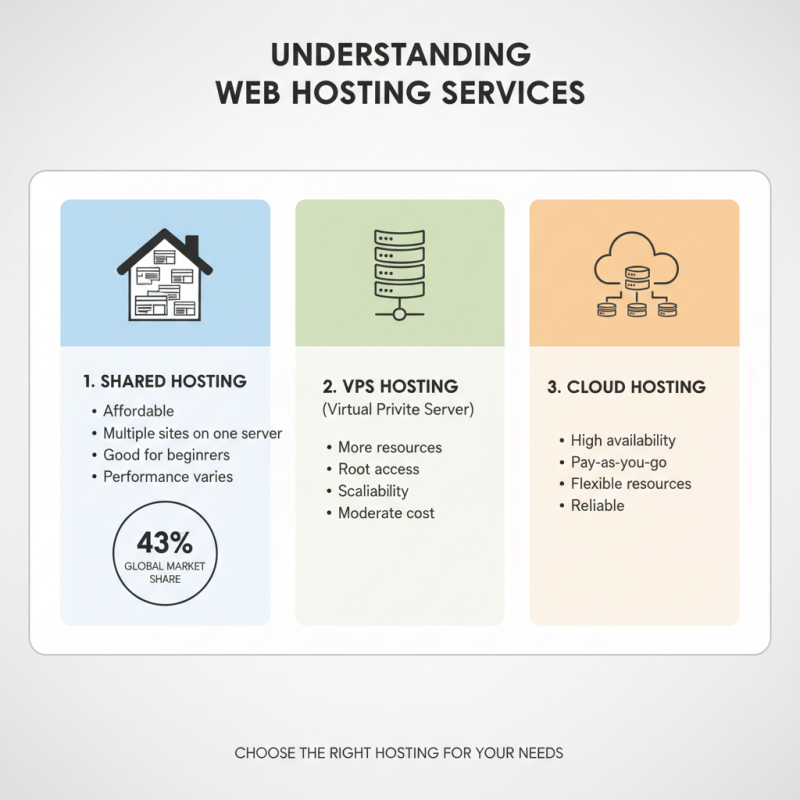
When selecting a web hosting service, understanding the various types is essential. Shared hosting is popular for beginners. It allows multiple sites on one server. This makes it affordable. However, performance may decline with high traffic. According to a recent industry report, shared hosting accounts for 43% of the global market.
VPS hosting offers more power and flexibility. Users get dedicated resources on a virtual server. This suits medium-sized businesses well. Data shows that VPS hosting is growing at a rate of 33% annually. It strikes a balance between cost and performance. Many users transition from shared to VPS as their needs expand.
Dedicated hosting is the ultimate choice for large organizations. This type provides an entire server for one user. Security and performance are top-notch. However, it's significantly more expensive. A survey reveals that 25% of enterprises prefer dedicated hosting for critical applications. Yet, the higher cost may drive smaller companies away. Understanding these options helps align your choice with specific needs.
Evaluating Key Performance Metrics: Uptime, Speed, and Support Response
Choosing a web hosting service involves critical performance metrics like uptime, speed, and support response. Uptime is a primary factor; sites with 99.9% uptime can lose traffic. Research from industry leaders shows that even a minute of downtime can cost businesses thousands in lost revenue. A dependable service should guarantee this metric.
Speed is equally vital. According to Google, a one-second delay can decrease user satisfaction by 16%. Slow sites lead to high bounce rates. Data indicate that a well-optimized hosting service can improve load times significantly. But many users overlook the impact of server response time on speed. It’s essential to find a host that prioritizes performance.
Support response is the third pillar. Customers benefit from tailored support, especially when issues arise. A study revealed that 66% of consumers have switched providers due to poor customer service. Effective hosting services should offer 24/7 support, ensuring reliability. However, response times can vary widely, and not all providers meet these standards consistently. It's crucial to research and read reviews for genuine insights.
Top Hosting Tips for Choosing the Best Services Worldwide
| Service Provider |
Uptime (%) |
Speed (ms) |
Support Response Time (hrs) |
| Service A |
99.99 |
150 |
1.5 |
| Service B |
99.95 |
200 |
2 |
| Service C |
99.97 |
180 |
1 |
| Service D |
99.90 |
220 |
3 |
Cost Analysis: Comparing Pricing Structures for Various Hosting Providers
When considering web hosting, pricing is a critical factor. Various providers offer different pricing structures, which can be confusing. You might find low initial rates, but hidden fees often surface later. Look at renewal costs, as they can rise significantly. Understanding the long-term expenses is crucial.
Many hosting providers promote attractive discounts for the first year. However, these can mislead beginners. A service that appears affordable may become costly after renewal. Analyze storage limits, bandwidth, and support quality. Cheaper plans often include limited resources or slower response times. Evaluate these aspects carefully.
In your research, note that some services may provide more value than their price suggests. Consider customer reviews as they reveal the reliability of hosts. Always weigh the balance between cost and quality. Each provider has its pros and cons. Don't rush into a decision. Reflect on what features are essential for your specific needs.
Security Features to Consider: Protecting Your Website from Cyber Threats
When selecting a hosting service, security features should be a top priority. Cyber threats come in many forms, such as data breaches and malware attacks. A secure hosting environment can protect sensitive information and enhance customer trust. Look for services that provide SSL certificates. This ensures that the data exchanged between the server and your website remains encrypted.
Consider features like firewalls and DDoS protection, which are vital. They create an added layer of security against malicious traffic. Regular backups are essential too. They ensure that your website can recover quickly after an attack. Some might overlook these features, assuming their site is safe, but neglecting security can lead to costly consequences.
Evaluate the hosting provider’s security protocols. Transparency is crucial. They should clearly detail their security practices. If information is unclear, it raises concerns about their reliability. Ask questions about their incident response plan. How quickly can they act in the event of a breach? Understanding these details can help protect your online presence effectively.
Top Hosting Tips for Choosing the Best Services Worldwide