Top Hosting Sites to Consider for Your Website?
When starting a new website, choosing the right hosting site is crucial. According to a report by Hosting Advice, nearly 30% of users abandon sites that take longer than three seconds to load. This highlights the importance of selecting reliable hosting sites. In the competitive online landscape, slow and unreliable hosting can negatively impact user experience and metrics.
Many hosting sites provide various services and price points. However, not all of them deliver the reliability or speed needed for optimal performance. Data from Clutch shows that 86% of consumers expect businesses to provide a website, and 75% of users judge a company's credibility based on its website design. If your hosting site fails to deliver, it can harm your brand's reputation.
It is essential to assess your website's specific needs when evaluating hosting sites. For instance, shared hosting may be budget-friendly, but it might lead to slower performance during peak times. Understanding the trade-offs is vital in making an informed choice. Evaluating options can sometimes feel overwhelming, yet a well-chosen hosting site can substantially enhance your website's growth and success.

Top 10 Factors to Evaluate When Choosing a Hosting Provider
When choosing a hosting provider, consider the uptime record. Reliable uptime usually means your site will be accessible. If your site is down, you lose visitors. Look for a service that guarantees at least 99.9% uptime. That’s essential for any online business.
Next, evaluate the customer support options available. Quick and effective support can save you time and headaches. Check if they offer 24/7 assistance. Live chat can be a great relief during emergencies. You want a host that is responsive and helpful. It’s also important to read reviews from actual users.
Finally, think about scalability. Your website may grow more than you initially expect. A good host should offer easy upgrades. This flexibility lets you adapt as your business evolves. A lack of scalability can limit your potential. Ensure that the hosting plan aligns with your future needs.
Understanding Different Types of Hosting: Shared, VPS, and Dedicated
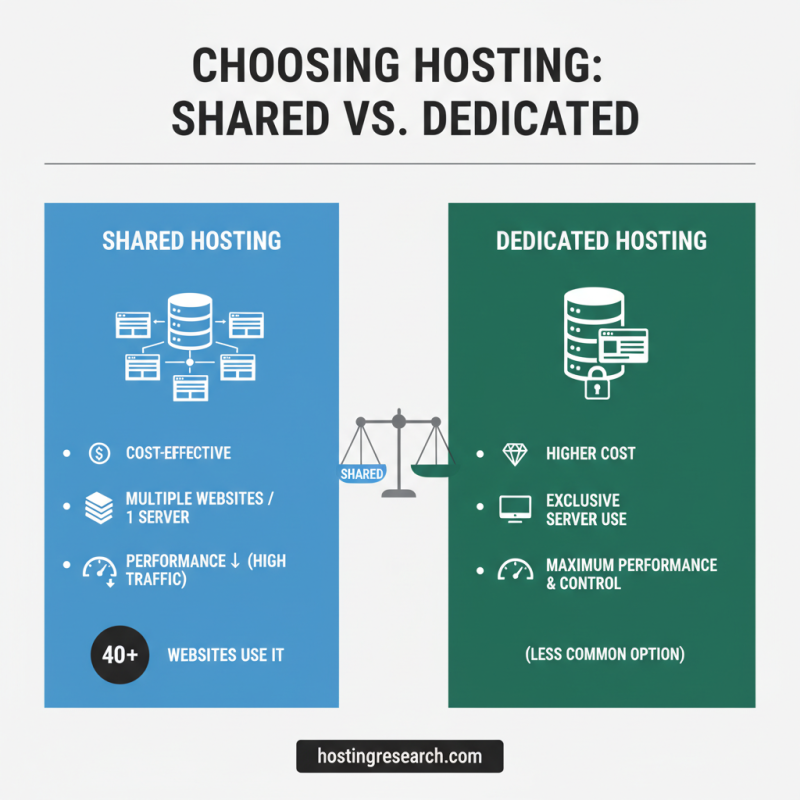
When choosing a hosting type, understanding the differences is crucial. Shared hosting is the most popular option. It is cost-effective and allows multiple websites to share a server. According to a report by hosting research, over 40% of all websites use shared hosting. However, performance can suffer. As traffic increases, speed may decrease.
Virtual Private Servers (VPS) offer a step up from shared hosting. VPS uses virtualization to divide a single server into multiple environments. This means you get more resources. Studies show VPS can handle up to 30% more traffic compared to shared hosting. Yet, it requires more technical knowledge. Users might find themselves troubleshooting issues they didn’t expect.
Dedicated hosting provides an entire server for one user. It's ideal for large businesses requiring high performance. It can handle heavier traffic without slowdowns. However, the costs are significantly higher. A survey revealed that only about 10% of websites use dedicated hosting, primarily due to expense. Many businesses hesitate here, thinking it might be overkill. Depending on needs, this can lead to wasted budget on unnecessary resources.
Performance Metrics: Analyzing Uptime and Speed Data from Providers
When evaluating web hosting services, two key performance metrics stand out: uptime and speed. A recent report revealed that optimal uptime should be at least 99.9%. This is crucial for keeping your website accessible. However, many providers fall short. Some report uptime as low as 98%. This can result in customer frustration and lost revenue.
Speed is another critical factor in hosting performance. Research indicates that a delay of just one second can lead to a 7% reduction in conversions. Surprisingly, many hosting providers have average load times exceeding three seconds. Such delays can hurt user engagement and search engine rankings.
It’s vital to analyze these metrics before making a decision. Regularly reviewing uptime and speed statistics can provide insights into a host’s reliability. If uptime dips or speed slackens, it may warrant a reassessment. After all, a website can only perform well if its foundation—hosting—is solid.
Performance Metrics: Uptime and Speed of Hosting Providers
Customer Support Comparison: Response Times and Support Channels in Hosting
When choosing a hosting provider, customer support is crucial. Response times can vary greatly among different hosts. Some companies offer real-time chat and immediate responses, while others may rely on email support, leading to delays. This can be frustrating, especially during urgent situations.
Consider multiple support channels. A good host should provide options like live chat, phone support, and a comprehensive knowledge base. Quick response times are vital. A slower response can leave you stranded. This might lead to extended downtime for your website.
Tip: Test customer support before committing. Reach out with questions to gauge their response time.
Keep in mind, even the best hosting can have hiccups. Look for hosts that learn from mistakes. Read reviews about how they handle issues. Not all hosts will be perfect all the time. Choose one that acknowledges its flaws and works to improve.
Tip: Regularly check your host's customer service updates. Good communication can enhance your experience significantly. A reliable host provides peace of mind, especially during critical periods.
Top Hosting Sites to Consider for Your Website? - Customer Support Comparison: Response Times and Support Channels in Hosting
| Hosting Provider |
Average Response Time |
Support Channels |
Availability |
| Provider A |
1 Hour |
Live Chat, Email, Phone |
24/7 |
| Provider B |
30 Minutes |
Live Chat, Email |
24/7 |
| Provider C |
2 Hours |
Email, Phone |
Weekdays Only |
| Provider D |
15 Minutes |
Live Chat, Email, Phone, Knowledge Base |
24/7 |
| Provider E |
1.5 Hours |
Email, Knowledge Base |
24/5 |