Why Are Swarm Drones Revolutionizing Aerial Technology?
Swarm Drones are changing the landscape of aerial technology. These innovative aerial vehicles operate in coordinated groups. This method offers improved efficiency, coverage, and flexibility compared to single drones.
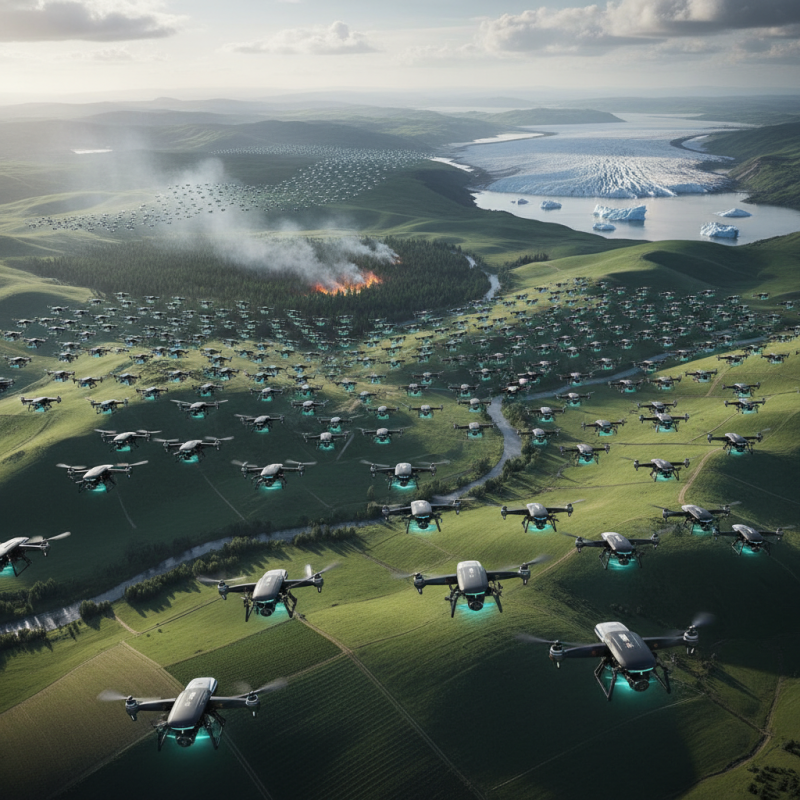
Imagine a swarm of small drones working together to survey vast landscapes. Their combined capabilities enable rapid data collection and analysis. This technology has immense potential for agriculture, disaster response, and environmental monitoring.
However, swarm drones also face challenges. Issues like communication, navigation, and collision avoidance are not fully resolved. The ethical implications of their use raise concerns as well. As we explore the potential of swarm drones, critical discussions must take place to address these shortcomings.
The Evolution of Swarm Drone Technology in Aerial Operations
The evolution of swarm drone technology is changing aerial operations significantly. These drones use collective behavior to perform tasks. They communicate with each other seamlessly. This allows for efficient formation flying, surveillance, and mapping. The technology simulates nature, similar to how birds flock. Each drone acts autonomously, yet contributes to a greater goal.
However, challenges remain. Coordination among multiple drones can be complex. Environmental factors can disrupt communication. Safety concerns arise when operating in crowded areas. Swarm technology needs more testing to ensure reliability. Despite these issues, the potential benefits are immense. Swarm drones can cover vast areas in a short time. They offer a flexibility that traditional drones cannot match.
As this technology matures, applications will expand. Potential uses include search and rescue, agriculture, and environmental monitoring. Still, ethical considerations must be addressed. How do we ensure responsible usage? These questions demand thoughtful responses as we advance. The revolution in aerial technology is just beginning.
Key Advantages of Swarm Drones Over Traditional Aerial Systems
Swarm drones are changing the way we think about aerial technology. Unlike traditional drones that operate individually, swarm drones work together as a cohesive unit. This collaboration allows them to cover larger areas more efficiently. For instance, a swarm can perform tasks like mapping or surveillance in a fraction of the time it would take a single drone. The synchronized movements create a dynamic that enhances their functionality.
The key advantages of swarm drones lie in their flexibility and robustness. They can adapt to various environments and tasks quickly. If one drone fails, others can take over its responsibilities. This redundancy feature is invaluable in critical missions. Furthermore, the ability to communicate and strategize collectively leads to improved decision-making. However, managing such a fleet presents challenges. Ensuring reliable communication and coordination among many drones can be complex.
Swarm drones also contribute to cost-effectiveness. Deploying multiple smaller drones can be cheaper than using one large unit. Yet, this approach may require more ground control and maintenance resources. As technology evolves, understanding the balance of efficiency and management will be crucial. The potential is immense, but the operational intricacies must not be overlooked.
Advantages of Swarm Drones Over Traditional Aerial Systems
Applications of Swarm Drones in Agriculture and Disaster Management
Swarm drones are transforming agriculture. According to a recent report, these drones can increase crop yield by up to 20%. They work together, covering vast areas quickly. This efficiency is crucial for farmers with large fields. Swarms can monitor crop health, detect pests, and even apply fertilizers. The combination of speed and precision makes them valuable tools.
In disaster management, swarm drones play a vital role. They can survey affected areas in real time. A 2022 study found that swarms can map disaster zones 70% faster than traditional methods. This rapid assessment enables quicker response times. Yet, challenges remain. Effective communication among drones is still a growing concern. Weather conditions can also limit their effectiveness. Continuous improvements are essential to maximize their potential in crisis situations.
As the technology advances, we must reflect on its limitations. Reliability in unexpected scenarios needs attention. Solutions are needed to ensure that swarms can function autonomously in diverse environments. In agriculture and disaster applications, swarms can enhance efficiency. However, ongoing research and development will be crucial for addressing current challenges.
Why Are Swarm Drones Revolutionizing Aerial Technology?
| Application | Use Case | Benefits | Challenges |
| Agriculture | Crop monitoring and precision spraying | Increased efficiency, reduced chemical use | Initial cost of technology, training required |
| Disaster Management | Search and rescue operations | Rapid assessment of disaster areas, real-time data | Coordination among multiple units, communication issues |
| Environmental Monitoring | Wildlife tracking and habitat analysis | Cost-effective data collection, minimal disturbance | Data interpretation complexities, regulatory hurdles |
| Infrastructure Inspection | Bridge and tower inspections | Enhanced safety, reduced downtime | Technical maintenance, weather dependency |
| Security Surveillance | Real-time monitoring of large areas | Improved response times, broader coverage | Privacy concerns, potential for misuse |
Industry Forecast: The Economic Impact of Swarm Drones by 2030
Swarm drones are on the brink of changing industries. By 2030, they are expected to contribute over $20 billion to the global economy. This growth is driven primarily by their efficiency and cost-effectiveness. For example, swarm drones can replace traditional delivery methods. They accomplish tasks faster and at a fraction of the cost.
However, challenges remain. Many sectors must adapt to this new technology. Regulations are still catching up. Security concerns also linger, making users hesitant. In addition, the technology itself is not without flaws. Studies show that failure rates can be high when deploying large numbers of drones together. Swarm drones require advanced software and reliable systems to function correctly.
Despite these issues, the potential is immense. The agriculture sector stands to benefit greatly. Drones can monitor crops and distribute resources effectively. A report estimates that by 2030, agricultural swarm drone usage could save farmers up to 30% in operational costs. This transformation is not only exciting but also a space that demands careful consideration. Balancing innovation with caution will be crucial as we move forward.
Challenges and Future Directions in Swarm Drone Development
Swarm drones are changing the landscape of aerial technology. They operate cohesively, mimicking how a hive of bees works. However, significant challenges lie ahead. One major issue is communications between drones. Signal interference can disrupt their coordination. This creates potential risks during missions in crowded environments. Additionally, ensuring robust cybersecurity measures is critical. Hackers could exploit weaknesses in drone networks.
Development also faces technical hurdles. Battery life remains a limitation. Drones often can’t fly long distances without needing a recharge. This impacts their efficiency in time-sensitive operations. Moreover, environmental factors pose risks. Drones can struggle with strong winds or heavy rain. These conditions could affect their performance and safety.
Ethical considerations are crucial. The potential for surveillance raises privacy concerns. Regulations must evolve to keep pace with technology. Stakeholders must think critically about these developments. Balancing innovation with responsibility is essential. Through this, swarm drones can fulfill their promise while addressing real-world challenges.