Top Fastest Web Hosting Services for Your Website Needs?
Choosing the fastest web hosting for your website can greatly impact its performance. A slow-loading site can frustrate visitors. It might even lead them to leave and never return. Speed is essential in today’s digital world. A quick response time keeps user engagement high.
When looking for the fastest web hosting, consider various factors. These include server location, uptime guarantees, and customer support. Some hosting services boast impressive speeds, but do they deliver consistently? It’s essential to evaluate user feedback and reviews to ensure reliability.
Many services claim high speeds, yet actual performance may differ. Users might find themselves disappointed. Additionally, the most expensive option isn’t always the best choice. Balancing speed, cost, and features requires careful thought. As you explore options, ask yourself: Are you prioritizing speed over all else?
Understanding Web Hosting: Key Concepts and Importance
Web hosting is vital for any online presence. It allows your website to be accessible on the internet. Without a reliable hosting service, your website may experience downtime. Research shows that 53% of mobile users abandon sites that take over three seconds to load. Speed is critical. Users expect quick access to information.
Security is another key factor. The global cost of cybercrime is projected to reach $10.5 trillion annually by 2025. This staggering figure highlights the importance of secure web hosting. Additionally, a good hosting service offers backups and security features to protect your data. Without them, you risk losing valuable information.
Many website owners overlook the importance of customer support. A survey found that 72% of customers prefer dealing with knowledgeable support staff. When issues arise, prompt assistance is crucial. Delays can harm your reputation. Choosing the right hosting provider means weighing these key aspects. It's more than just pricing. A careful selection process can save time and money in the long run.
Criteria for Evaluating Fast Web Hosting Services
When choosing a web hosting service, speed is crucial. Evaluating web hosting providers requires attention to specific criteria. One important factor is server response time. Each second delay can frustrate visitors. You should check how quickly the server responds to requests. Tools like ping tests can help measure this accurately.
Another aspect is the use of Content Delivery Network (CDN) technology. CDNs distribute content globally, reducing load times. However, not all hosting services offer this feature. If a provider lacks a CDN, your site may load slowly for distant users. Additionally, look into the server's uptime record. Frequent downtimes indicate reliability issues. It may be necessary to dig deeper into user reviews to ensure good uptime.
Support is also vital. Fast hosting can quickly turn slow if issues arise and support is lacking. Assess the responsiveness and knowledge of customer service. Real-time support options like live chat are often preferred. Consider potential shortcomings. Sometimes, a cheaper plan might compromise speed. Balancing cost and speed is essential. Reflect on how these elements play into your overall hosting needs.
Top Fastest Web Hosting Services for Your Website Needs
| Hosting Type |
Average Load Time |
Uptime Guarantee |
Server Location |
Customer Support |
| Shared Hosting |
1.2 seconds |
99.9% |
USA, Europe |
24/7 Live Chat |
| VPS Hosting |
800 ms |
99.95% |
USA, Asia |
Phone & Email Support |
| Dedicated Hosting |
500 ms |
99.99% |
Global |
24/7 Technical Support |
| Cloud Hosting |
600 ms |
99.9% |
North America, Europe, Asia |
24/7 Online Chat |
Top Fastest Web Hosting Providers in 2023
When it comes to web hosting, speed is crucial. A study revealed that 47% of users expect a website to load in two seconds or less. If your site takes longer, you risk losing half of your visitors. This is where the fastest web hosting providers shine. They offer optimized infrastructure and advanced caching solutions. These features lead to faster load times and improved user experience.
In 2023, many hosting providers are stepping up their game. A report showed that top-tier services can achieve load times under a second. They utilize SSD storage, enhanced bandwidth, and CDNs. This combination significantly reduces latency. However, not every provider achieves these speeds consistently. Some may promise fast loading times, yet fail to deliver. Evaluating performance metrics from various users can help in choosing a reliable service.
It's also essential to consider customer support. Speed is not just about technology; it encompasses service response time too. A fast server means little if support is slow. Many users report frustration during downtime incidents. With 24/7 support, some hosts can resolve issues quickly, minimizing disruption. Always check reviews for real-world experiences before deciding.
Top Fastest Web Hosting Services in 2023
Comparative Analysis of Speed and Performance Metrics
When analyzing web hosting services, speed and performance metrics are crucial. A slow website can lead to high bounce rates. Studies indicate that a one-second delay can decrease user satisfaction by 16%. Furthermore, websites that load within five seconds can engage 70% more visitors. This highlights the importance of choosing a reliable host for optimal speed.
Data shows that the average website takes about 8 seconds to fully load. For e-commerce sites, every second late can result in a 20% drop in conversion rates. Metrics to consider include server response time, page load speed, and uptime. Pay attention to these figures when selecting a service.
Tips: Regularly check your website’s load time. Use tools to measure performance after launching. Optimize images and reduce unnecessary scripts. Consider using a content delivery network (CDN) for better load distribution. Test multiple hosting services to see which meets your speed needs. A solid understanding of these metrics can enhance your website's overall performance.
Tips for Choosing the Right Hosting Service for Your Website
Choosing the right hosting service for your website can be daunting. Start by identifying your needs. Are you building a blog, an online store, or a portfolio? Each type requires different resources. Think about the traffic you expect. High traffic means you need more bandwidth.
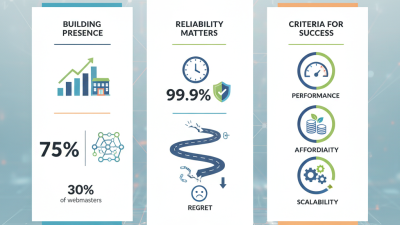
Consider the uptime guarantee. A reliable service should promise 99% uptime or better. Look into their customer support options too. Will they help you 24/7? Fast response times matter, especially during emergencies. Read reviews, but be wary. They may not tell the whole story.
Evaluate the scalability of the service. As your website grows, will the hosting grow with it? Some services can limit you later. Don’t overlook security features. Data breaches can cost you. Check if they offer backups and SSL certificates. It’s crucial for your peace of mind.