10 Essential Tips for Choosing the Best Internet Hosting Service?
Choosing the right internet hosting service is essential for your online success. With numerous options available, making the right choice can be overwhelming. A reliable hosting provider offers speed, security, and excellent support. This decision impacts your website’s performance and user experience.
Consider what features matter most to you. Some users prioritize uptime, while others focus on customer service. Reliability is key; downtime can drive visitors away. Reading reviews is crucial to gauge the experiences of others.
Moreover, pricing structures can vary dramatically. Some companies offer attractive introductory prices, but renewal rates may surprise you. It is essential to understand what you are paying for. The right internet hosting service can elevate your online presence, but the wrong one can hinder it. Reflect on your specific needs to find the perfect fit.
Understanding Different Types of Internet Hosting Services Available Today
When selecting an internet hosting service, understanding the various types available is crucial. Shared hosting is the most common choice for small websites. It is affordable and user-friendly. However, it may lack the performance needed for high-traffic sites. According to industry reports, around 60% of small businesses choose shared hosting. This option comes with limitations in terms of resources and control.
Dedicated hosting offers more power and flexibility. This solution is ideal for larger websites or apps with significant traffic. Businesses can customize their server settings. Yet, the cost is much higher, which may lead to budget constraints. A survey indicated that around 25% of enterprises opt for this type due to its robust features.
Cloud hosting is another key option. It allows businesses to scale resources as needed. Reports show rapid growth in cloud adoption, with an estimated 40% increase in demand in recent years. This model provides redundancy and can enhance site reliability. However, costs can add up quickly if not monitored. Understanding these types is essential for a strategic choice in today’s competitive digital landscape.
Comparison of Different Types of Internet Hosting Services
Evaluating Reliability: Uptime Percentages and Impact on Your Website
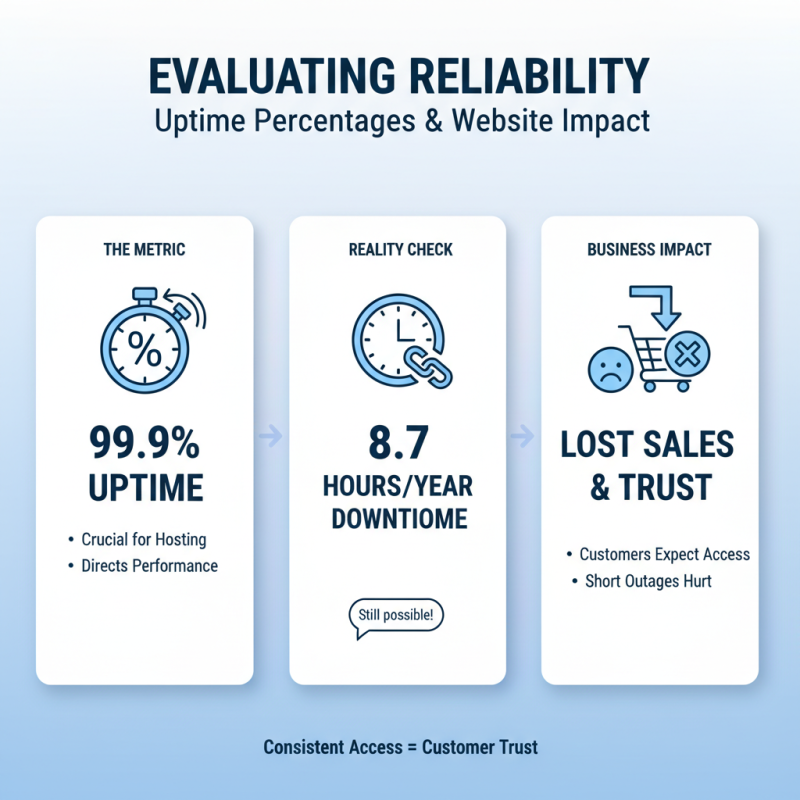
When evaluating internet hosting services, uptime percentages are crucial. A host's uptime directly affects your website’s performance and reliability. For instance, a service with a 99.9% uptime means your site could still experience downtime, about 8.7 hours a year. Think about how that might affect your business. Customers expect consistent access; even short outages can lead to lost sales or diminished trust.
Consider these tips. Check reviews for real user experiences. Search for comments on downtime incidents. If users frequently mention access issues, that's a red flag. Ask potential hosts about their uptime guarantees. They should be able to provide detailed metrics that support their claims.
Don’t overlook server location. A host's data center location impacts loading speed. This is essential for user experience. Remember, faster websites attract more visitors. Look for hosts with multiple data centers for better redundancy and performance. Ultimately, rely on your research to choose the right hosting service. A poor choice can lead to regret down the road.
Assessing Performance Metrics: Load Speeds and Server Response Times
When selecting an internet hosting service, assessing performance metrics is crucial. Load speeds directly affect user experience. A slow website can lead to high bounce rates. Research shows users expect sites to load in two seconds or less. If it takes longer, many will leave without engaging. This is why checking a host’s speed is essential.
Server response times also play a vital role. This metric indicates how quickly a server responds to requests. Ideally, it should be under 200 milliseconds. A response time that exceeds this can disrupt the user experience and hurt your site's ranking. Tools are available to monitor these metrics, yet not all hosts provide the same level of performance data.
Invest time in evaluating these aspects. Consider running tests on various hosting services before deciding. Many hosting providers offer trial periods. Use this time to monitor load speeds and server response. Reflect on whether the initial speed matches real-world performance. Taking shortcuts during this phase can lead to poor long-term outcomes. Aim for a hosting solution that consistently meets your performance expectations.
10 Essential Tips for Choosing the Best Internet Hosting Service
| Hosting Type |
Load Speed (ms) |
Server Response Time (ms) |
Uptime (%) |
Customer Support (Rating) |
| Shared Hosting |
200 |
300 |
99.9 |
4.2 |
| VPS Hosting |
150 |
250 |
99.95 |
4.5 |
| Dedicated Hosting |
100 |
200 |
99.99 |
4.8 |
| Cloud Hosting |
120 |
220 |
99.9 |
4.6 |
| Managed WordPress Hosting |
130 |
210 |
99.8 |
4.7 |
Cost Analysis: Balancing Features with Pricing in Your Hosting Choice
When selecting an internet hosting service, cost analysis is crucial. A comprehensive study by Hosting Tribunal found that about 67% of businesses consider price as a vital factor. Balancing features and pricing is essential to find value. Many hosting plans appear cost-effective at first glance. However, hidden fees and renewals can inflate costs significantly after the initial term.
Statistics from Datacenter Hawk indicate that the average price for basic web hosting ranges from $5 to $30 per month, yet premium services can exceed $200 monthly. Understanding what is included in the pricing structure is important. Look for bandwidth limits, storage, and customer support quality. A low monthly fee might not cover essential features, leading to higher costs in the future.
Many users overlook scalability when assessing cost. As a business grows, hosting needs change. Reports show that 55% of small businesses run into issues with their hosting plans. Upgrading unexpectedly can lead to frustration and additional expenses. It’s valid to question whether your hosting choice can adapt. Ensuring your provider meets long-term needs while keeping costs reasonable is a key factor.
Customer Support Evaluation: Importance of 24/7 Assistance and Resources
When selecting an internet hosting service, customer support should be a top priority. A 2022 study found that 65% of users experienced downtime, which severely impacted their operations. This highlights how crucial it is to have immediate assistance whenever issues arise. Hosting services that offer 24/7 customer support can significantly reduce stress during emergencies. Quick responses can make a difference between resolving an issue within minutes or hours.
Moreover, resources like tutorials and FAQ sections can empower users. A survey revealed that 57% of customers prefer self-service options to solve problems quickly. Having access to these resources can supplement live assistance, providing a comprehensive support system. However, not all companies prioritize updating these resources. This might lead to outdated information, which can frustrate users further. It's important to evaluate not just the availability of support but also its effectiveness and responsiveness.
Evaluating customer support is essential, yet some might overlook it. Users often find themselves in situations where timely assistance is vital. Ignoring support features can leave your website vulnerable to outages. It's crucial to think critically about the level of support necessary for your specific needs.