How to Choose the Best Hosting Providers for Your Business?
Choosing the right hosting providers is crucial for your business success. Research indicates that nearly 70% of consumers trust a company's website more if it has a reliable hosting service. Performance metrics show that a one-second delay in loading time can lead to a 7% reduction in conversions. This underscores the importance of selecting a provider that offers speed and reliability.
However, the process can be overwhelming. Many businesses fail to thoroughly evaluate their options, leading to costly mistakes. A recent survey found that 55% of small businesses have changed hosting providers at least once due to service issues. Inconsistent uptime and poor customer support are common complaints.
When searching for hosting providers, it’s vital to consider factors such as scalability and security features. Each provider has unique strengths, and businesses often overlook critical aspects. Reliable information is essential to making an informed choice. By understanding your specific needs and evaluating providers based on proven industry metrics, you can avoid expensive pitfalls and ensure long-term success.

Understanding Different Types of Hosting Services Available
When choosing a hosting provider, understanding the types of services available is vital. There are several options offered. Shared hosting is one of the most common choices. It’s affordable and simple to manage. However, performance can be inconsistent due to many users sharing resources. This can lead to slow loading times during peak traffic.
VPS hosting acts as a middle ground. It offers more resources than shared hosting. It provides better performance. Users have more control compared to shared environments. Yet, it can be overwhelming for those without technical backgrounds. Dedicated hosting is another option. It gives you an entire server dedicated to your website. This means excellent performance and security. But, it comes with a higher price tag and requires technical management.
Cloud hosting is also gaining popularity. It allows businesses to scale resources easily. If traffic spikes suddenly, you won’t crash. Yet, the technology can be complex. Users might struggle with understanding the billing systems. Each type of hosting has its pros and cons. No one solution fits all. Consider your unique needs and expertise before making a final decision.
Evaluating Performance and Reliability of Hosting Providers
When selecting a hosting provider, evaluating
performance and reliability is crucial.
Speed affects user experience. Websites that load slowly frustrate visitors
and can increase bounce rates. A fast hosting service provides solid performance metrics, including
uptime and load times. Uptime should consistently be
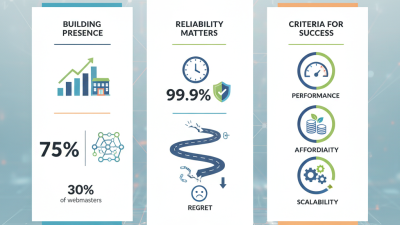
99.9% or higher. This means your site is
accessible almost all the time.
To assess reliability, research customer reviews and performance testing. Look for detailed insights
into how a provider handles downtimes and technical issues. A provider's support team should be responsive.
Long waiting times can lead to lost revenue and trust. Testing their
customer service can save future headaches.
Here are some tips for evaluation:
- Check third-party reviews regularly.
- Use tools that monitor website performance.
- Consider a provider’s scalability options.
Each business has unique needs, and adjusting hosting plans can be essential as you grow. It's important
to reflect on your future requirements, not just current ones.
Assessing Customer Support and Technical Assistance Options
When evaluating hosting providers, customer support should be a top priority. Effective support can save you time and prevent costly downtimes. Look for companies that offer 24/7 support through multiple channels. Phone, live chat, and email options are essential for quick resolutions.
Tips for assessing customer support:
- Read reviews: Discover real experiences from other users.
- Test response time: Reach out before making a decision. A prompt reply is a good sign.
- Check knowledge base: An extensive library of guides indicates a focus on self-help.
Technical assistance is also crucial. Quality providers offer setup assistance, software installation, and troubleshooting.
Ensure they have knowledgeable staff who understand the technology stack you’re using. This expertise can make a significant difference, especially during critical moments.
Consider your own needs as well. You might not need constant support, but knowing it’s available can provide
peace of mind. Evaluate whether you'll require ongoing technical help or if you can manage on your own. Balancing cost with the level of support can be tricky, but it’s essential for long-term success.
Comparing Pricing and Payment Plans of Hosting Services
When selecting a hosting provider for your business, pricing and payment plans are key factors. Different hosting services have various pricing tiers, so ensure that you compare them effectively. Some providers offer monthly payment plans, while others might incentivize annual payments with reduced rates. Pay attention to renewal fees as they can significantly impact your budget.
Consider not just the base prices but also what each plan includes. For instance, look for features like bandwidth limits, storage capacity, and customer support options. Some cheaper options may lack essential resources like SSL certificates or backups, which can lead to unexpected costs later.
Tips: Always read the fine print of service agreements. Hidden fees can turn a good deal into a costly mistake. Additionally, try to find user reviews on price satisfaction. This could help verify if the service's value matches its cost. If you're unsure, consider starting with a trial period to test the services before committing.
Analyzing Security Features and Backup Options in Hosting Plans
When selecting a hosting provider, security features and backup options are crucial factors. A strong security system protects your data from breaches. Look for features like SSL certificates, firewalls, and anti-malware tools. These tools detect vulnerabilities and keep your website safe. They also build customer trust. Without robust security measures, your business is at risk.
Backup options are equally important. A reliable hosting provider should offer automatic backups. This protects your data from unexpected loss due to system failures or cyberattacks. Check how often backups are performed. Daily backups may be necessary for dynamic websites. It's worth exploring how easy it is to restore your data. In some cases, the restoration process can be cumbersome.
Choosing a hosting provider is not just about price. Focus on the level of security and backup services they offer. A low-cost plan might lack essential features. Evaluate the effectiveness of their solutions. Sometimes, the best options can be overlooked in favor of flashy advertising. Thoughtful consideration can help you make a safer choice for your business.
How to Choose the Best Hosting Providers for Your Business? - Analyzing Security Features and Backup Options in Hosting Plans
| Provider Type |
Security Features |
Backup Options |
Uptime Guarantee |
Customer Support |
| Shared Hosting |
SSL Certificates, DDoS Protection |
Weekly Backups |
99.9% |
24/7 Live Chat |
| VPS Hosting |
Firewall, Intrusion Detection |
Daily Backups |
99.95% |
Phone and Email Support |
| Dedicated Hosting |
Advanced Security Monitoring |
On-Demand Backups |
99.99% |
Dedicated Account Manager |
| Cloud Hosting |
Data Encryption, Regular Security Audits |
Auto Backups |
99.98% |
24/7 Customer Support |