Why Choose the Right Hosting Plans for Your Website Success?
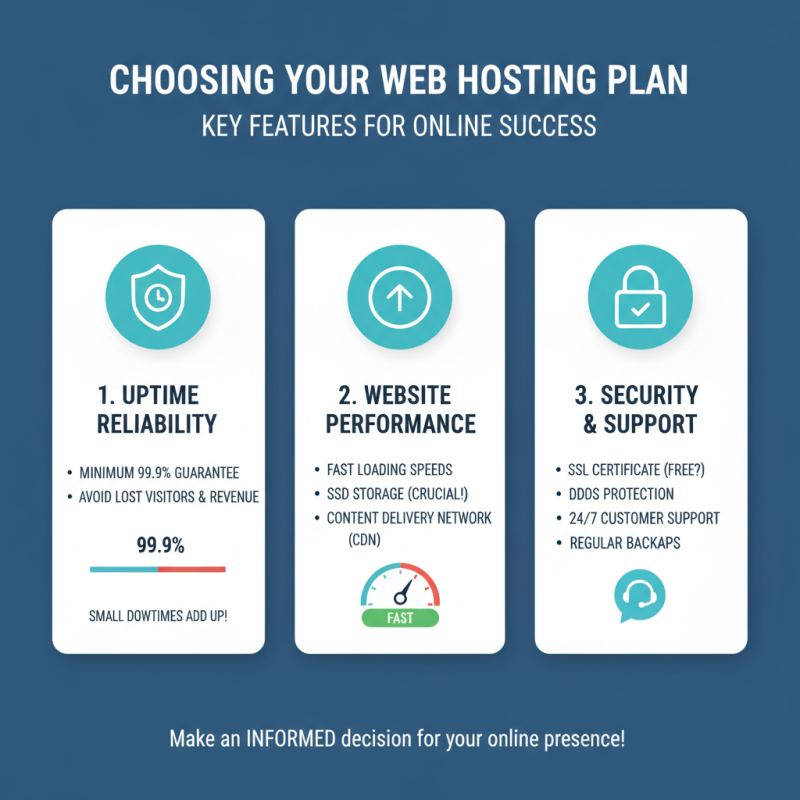
Choosing the right hosting plans can significantly impact your website's success. A well-chosen plan improves website speed, uptime, and security. These factors are crucial for retaining visitors and enhancing user experience. Many new website owners overlook the importance of hosting options.
Not all hosting plans are created equal. Some might promise excellent performance but fail to deliver. Budget-friendly plans often come with limitations that can hinder growth. For instance, shared hosting may be cheaper, but it can lead to slow load times, especially during peak traffic. Your choice can determine your website’s reliability.
Reflecting on what your website needs is vital. Are you prioritizing speed or cost? Each decision shapes your website’s future. Investing time in selecting the right hosting plans can prevent long-term issues. Consider both current needs and future scalability. A poor choice today might lead to larger problems tomorrow.

Understanding the Importance of Web Hosting for Online Presence
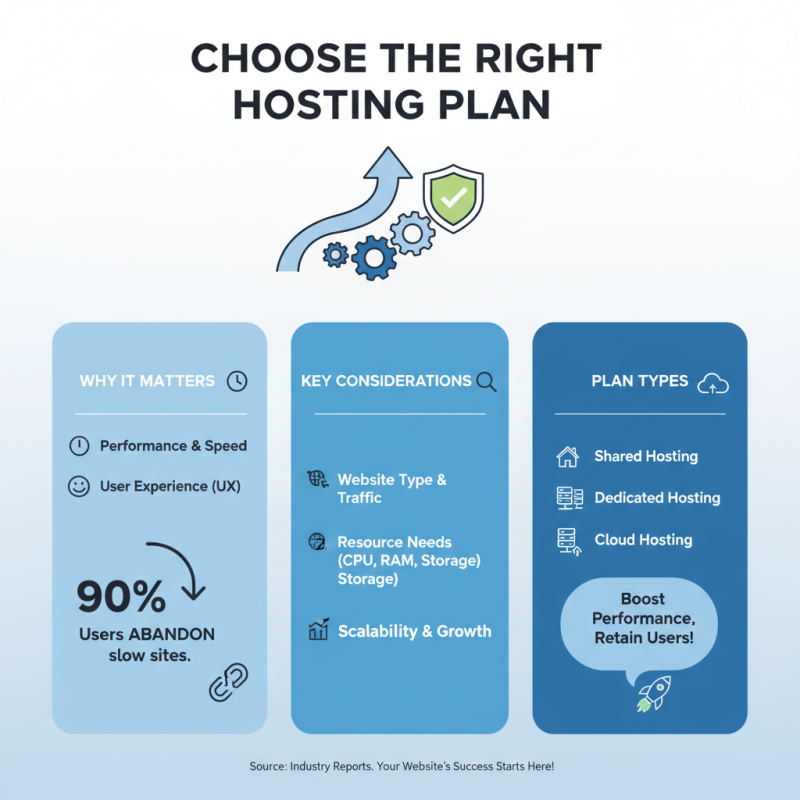
Web hosting plays a crucial role in establishing a strong online presence. A report from the Internet Infrastructure Coalition reveals that 30% of users abandon sites that take over three seconds to load. Choosing the right hosting service can drastically improve loading speeds. Fast websites enhance user experience and boost search engine rankings. The importance of reliable hosting cannot be overstated.
Statistics show that 46% of users judge a company by its website design. If a website is slow or frequently down, it reflects poorly on the brand. Further, 72% of consumers prefer mobile-friendly websites. Hosting with responsive design capabilities is vital for success. Yet, many businesses overlook this. They pick plans based on price instead of performance. This can lead to lost customers and revenue.
A poor hosting choice can result in frequent downtimes. Research indicates that just one hour of downtime can cost a small business about $8,000. In contrast, investing in quality hosting can save money in the long run. It's essential to reflect on these choices. A meticulous approach can lead to better outcomes for online businesses.
Why Choose the Right Hosting Plans for Your Website Success? - Understanding the Importance of Web Hosting for Online Presence
| Hosting Plan Type | Typical Use Cases | Average Monthly Cost | Key Features |
|---|---|---|---|
| Shared Hosting | Small blogs, personal websites | $3 - $10 | Cost-effective, user-friendly, basic support |
| VPS Hosting | Medium-sized businesses, online stores | $20 - $80 | Dedicated resources, better performance, scalable |
| Dedicated Hosting | Large enterprises, high-traffic websites | $80 - $300+ | Full server control, high security, optimal performance |
| Cloud Hosting | Startups, websites with unpredictable traffic | $10 - $100+ | Highly scalable, pay-as-you-go, reliable uptime |
| Managed WordPress Hosting | WordPress websites, bloggers | $15 - $45 | Optimized for WordPress, automatic updates, enhanced security |
Related Posts
-

Top 10 Best Website Hosting Services for 2026?
-
2026 Top Hosting Sites to Boost Your Online Presence?
-

Top 10 Best Hosting Providers for Good Performance and Reliability?
-

How to Choose the Best Web Hosting Service for Your Needs?
-

How to Choose the Best Web Hosting Platforms in 2026?
-
Top 10 Website Hosting Sites You Should Consider in 2026?