Choosing the right domain and web hosting for your website is crucial. It shapes your online identity. A domain name is more than just an address; it represents your brand and mission. Selecting a fitting name requires careful thought. You want it to be memorable and relevant.
Web hosting is equally important. It determines how your website will perform. A reliable host ensures your site runs smoothly. Yet, many overlook this factor. They choose based on price alone, which can lead to issues later. Performance, uptime, and customer support matter.
In this digital age, making informed choices is vital. Potential visitors notice if your site is down or slow. Thus, understanding domain and web hosting is key for success. Taking the time to analyze your options can save trouble down the line. After all, your online presence deserves the best foundation.

Choosing the right domain and web hosting is crucial for your website's success. Your domain name is your online identity. It should be memorable and relevant to your content. Poor choices can lead to confusion. Avoid complex spellings; keep it simple. A good name enhances credibility.
Web hosting may seem secondary, but it impacts site performance. Slow load times frustrate visitors. They might leave before seeing your content. Look for features like uptime guarantees. They ensure your site remains accessible. Some hosts offer excellent customer support. This can save you during technical issues.
Tip: Research multiple hosting options. Compare features and prices. Don't rush this decision. It can affect your site's growth. You might regret choosing a cheaper option without reliability. Invest wisely to ensure your website thrives.
Choosing the right domain name is crucial for any website. It serves as your online identity and can affect your brand perception. Research shows that 77% of users judge a company's credibility based on its website. A memorable domain can lead to higher traffic and better SEO rankings.
When selecting a domain, consider length, keyword relevance, and ease of spelling. Shorter names are generally more effective. Aim for 8-12 characters to improve memorability. Use keywords that reflect your content or services. For instance, integrating geographical terms can enhance local search visibility.
Tips for selecting a domain include brainstorming variations and checking availability. Use tools to explore synonyms or related terms. Don't rush the process. A poorly chosen name can lead to confusion. Many businesses regret their domain choices as they grow. Always think ahead to avoid future rebranding challenges.
When evaluating different types of web hosting services, consider the specific needs of your website. Shared hosting is often the most affordable option, perfect for smaller sites or blogs. It allows multiple users to share server resources, but this can lead to slower speeds during peak times.
VPS hosting offers enhanced performance and more control.
It divides one physical server into several virtual servers. This means you have dedicated resources, which can significantly improve site speed and stability.
However, managing a VPS might require more technical skills, which could be a challenge for some users.
Dedicated hosting provides the ultimate control.
You have an entire server to yourself, offering maximum performance.
Yet, this comes at a higher cost and requires a certain level of technical expertise.
Reflect on your budget and future growth. Will your site outgrow shared hosting soon? Balancing options can be tricky, but it is crucial for a lasting online presence.
When assessing your website's needs for performance and scalability, consider traffic projections. Studies show that around 70% of users abandon a website that takes over three seconds to load. This staggering number highlights the importance of fast web hosting, especially as your site grows.
Use reliable metrics to gauge how well your hosting can scale. Look for services that guarantee high uptime, typically above 99.9%. This minimizes downtime during peak traffic, which is critical for user retention. Monitoring tools can provide real-time insights, helping you adjust resources as needed.
Tips: Always choose a hosting plan that allows easy upgrades. Flexibility is vital. Also, consider content delivery networks (CDNs) to distribute your website’s content globally. It can drastically improve load times for international visitors. Reflect on whether your current service can meet future demands. Don’t overlook evaluating your hosting’s customer support; effective assistance during crises can save your business.
| Criteria | Basic Plan | Standard Plan | Advanced Plan |
|---|---|---|---|
| Domain Registration Cost | $10/year | $12/year | $15/year |
| Monthly Hosting Cost | $3.99 | $7.99 | $14.99 |
| Storage Space | 10 GB | 50 GB | Unlimited |
| Bandwidth | 100 GB | Unlimited | Unlimited |
| Free SSL Certificate | No | Yes | Yes |
| Email Accounts | 1 | 5 | Unlimited |
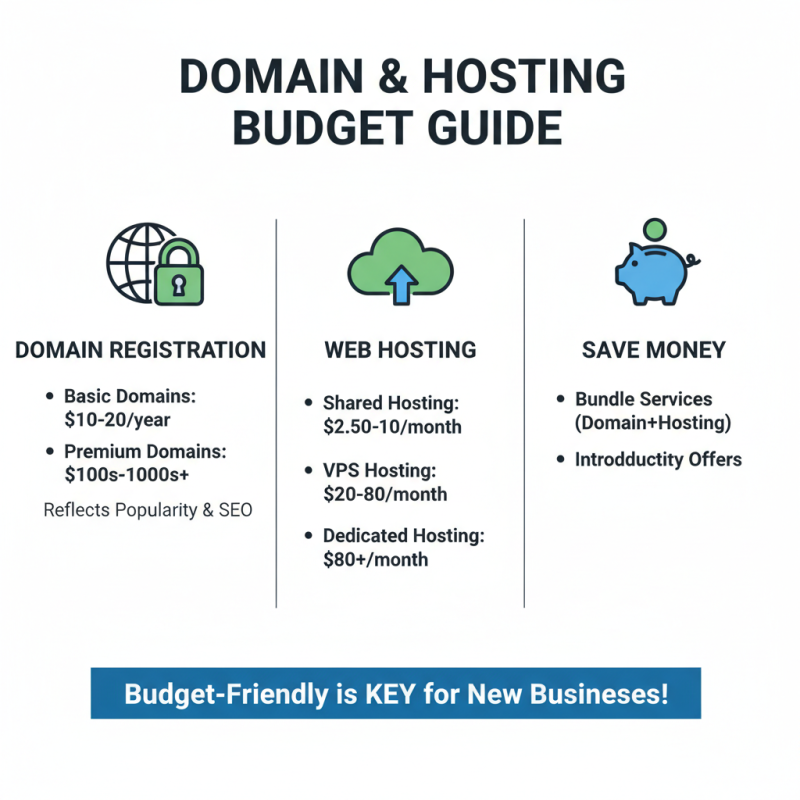
When choosing a domain and hosting service, budgeting is crucial. Prices vary widely, so understanding your options can save you money. Basic domain registration can cost around $10 to $20 per year. Yet, premium domains may go for hundreds or even thousands. A domain's price often reflects its popularity and SEO potential. For new businesses, a budget-friendly domain is essential.
Web hosting can also range significantly. Shared hosting may start around $3 to $10 monthly, while dedicated servers can exceed $100 per month. Research shows that 74% of small businesses spend less than $500 a year on web hosting. This statistic indicates that many find cost-effective solutions that still meet their needs. However, the cheapest option isn't always the best. Some budget hosts have slow speeds or limited support, which can impact your site’s performance.
Consider additional costs too. SSL certificates, email accounts, and website builders often come with hidden fees. Reports reveal that 20% of entrepreneurs overlook these expenses in their budgeting. This oversight can lead to unpleasant surprises. Be diligent in assessing all potential costs before committing. A careful evaluation can lead to a well-balanced decision that suits both your budget and website goals.